
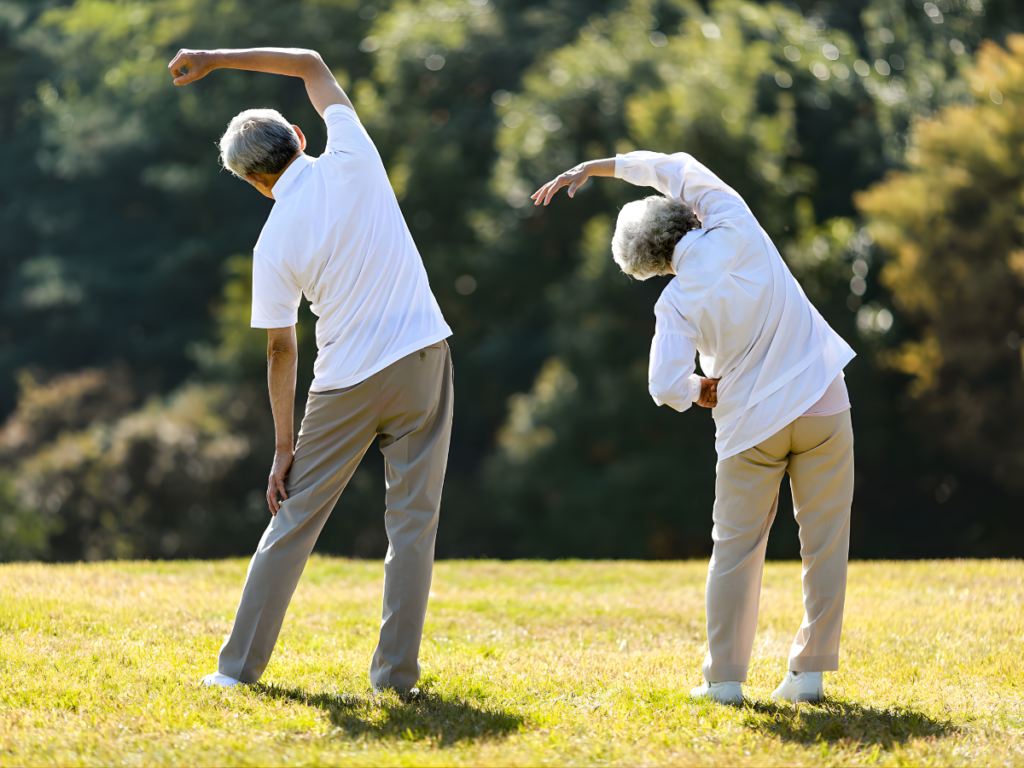
Longevity isn’t just about adding years to life, it’s about extending the quality and capacity of those years. The latest research in human performance and aging shows that the real key to longevity lies in how we move, how we respond to stress, and how we recover through sleep. These three elements movement, stress, and sleep are interwoven systems that determine how efficiently your body repairs, adapts, and evolves.
For decades, the pursuit of longevity focused heavily on genetics. Today, the conversation has shifted. According to researchers like Dr. David Sinclair of Harvard and Dr. Peter Attia, longevity is now understood as a modifiable state that can be influenced by daily choices, physiological regulation, and environmental inputs. The data is clear: the way you train, handle stress, and sleep creates measurable biological changes that extend your health span.
Movement: The Longevity Multiplier
Movement is not optional, it’s the biological signal for life. Every muscle contraction triggers a cascade of molecular events that influence metabolism, cognitive function, and even gene expression.
Recent studies in Nature Aging and Cell Metabolism demonstrate that consistent physical activity can modify pathways linked to aging including mTOR, AMPK, and sirtuins which regulate cellular repair, mitochondrial health, and energy efficiency. The more efficiently these systems operate, the slower your biological clock ticks.
But longevity through movement is not about training harder; it’s about training smarter.
1. Strength Training and Muscle Preservation
Sarcopenia, the age-related loss of muscle mass is now recognized as one of the most significant predictors of early mortality. Muscle isn’t just tissue; it’s an endocrine organ that releases myokines, which reduce inflammation, regulate insulin sensitivity, and improve immune function.
According to a British Journal of Sports Medicine meta-analysis (2022), individuals who performed resistance training twice per week had a 10–17% reduction in all-cause mortality. When combined with aerobic activity, the benefits nearly doubled.
The practical takeaway:
- Train major muscle groups at least twice per week.
- Focus on compound movements squats, deadlifts, pulls, presses.
- Maintain intensity but respect recovery; overtraining accelerates cellular stress.
2. Aerobic Capacity: The Ultimate Predictor
Cardiorespiratory fitness (VO₂ max) is arguably the strongest single biomarker of longevity. Research from the Cleveland Clinic following over 120,000 participants found that individuals in the highest fitness percentile had the lowest risk of mortality across all causes stronger than even non-smoking status or healthy weight.
To improve VO₂ max:
- Integrate zone 2 training (moderate intensity) for 150–180 minutes per week.
- Add high-intensity intervals 1–2 times per week to challenge the cardiovascular system.
- Walking daily is the most underrated form of active recovery and longevity conditioning.
3. Mobility and Neural Activation
Mobility training is not just for flexibility; it’s neuroprotective. Controlled movement under load stimulates proprioception and coordination key elements that maintain brain health and motor control as we age.
In fact, balance training is now being explored as a biomarker for biological age. A 2022 BMJ study revealed that adults unable to balance on one leg for 10 seconds had a significantly higher risk of mortality within 10 years.
Movement quality equals longevity quality. The nervous system thrives on varied, precise, and intentional movement.
Stress: The Double-Edged Catalyst
Stress is often vilified, but modern research reframes it as a neutral force neither good nor bad but dependent on regulation and recovery. Chronic stress accelerates aging through cortisol dysregulation, inflammation, and impaired cellular repair. However, acute, well-managed stress drives adaptation, the cornerstone of resilience and longevity.
1. Hormetic Stress and Adaptation
Hormesis describes the process by which small doses of stress strengthen biological systems. Exercise, heat exposure (sauna), cold therapy, fasting, and even intellectual challenge fall into this category. They upregulate antioxidant defenses, repair enzymes, and mitochondrial biogenesis.
Sauna use, for example, has been linked to 40% lower all-cause mortality in Finnish studies (JAMA Internal Medicine, 2015). Similarly, cold exposure has been shown to improve brown fat activation and insulin sensitivity.
Hormetic stress teaches the body to repair itself better. The key is frequency and does not excess.
2. Emotional and Cognitive Stress Regulation
While physical stress can be beneficial, psychological stress without release becomes toxic. Chronic emotional strain maintains high cortisol and low DHEA levels, a biochemical pattern that erodes cellular health and shortens telomeres (the protective caps on DNA).
Modern neuroscience now supports structured stress regulation:
- Breathwork: Practices like box breathing and cyclic sighing activate the vagus nerve, lowering sympathetic drive within minutes.
- Mindful micro-breaks: Even 2–3 minutes of mental detachment every hour reduces cumulative cognitive load.
- Purpose and social connection: Studies from the Harvard Study of Adult Development show that meaningful relationships are one of the strongest predictors of long-term health and happiness. Social isolation, in contrast, correlates directly with premature aging.
Stress becomes longevity fuel when paired with adequate recovery and emotional regulation. The goal is not to eliminate stress, it’s to build a stronger recovery system.
Sleep: The Cellular Reset
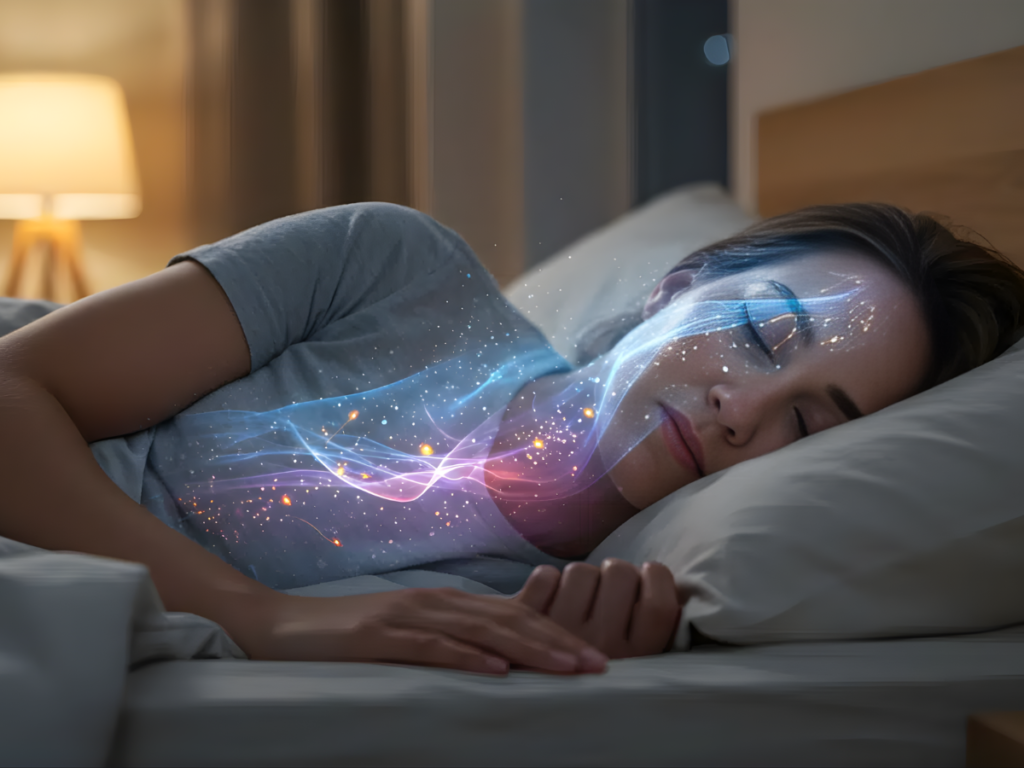
Sleep is the master regulator of longevity. It’s not merely downtime, it’s a coordinated biological repair operation that affects every system in the body. During deep sleep, growth hormone release peaks, synaptic pruning occurs, and glymphatic clearance removes metabolic waste from the brain.
Chronic sleep deprivation, even by an hour per night, raises inflammatory markers, reduces insulin sensitivity, and disrupts hormonal balance. Research from the University of California, Berkeley shows that poor sleep accelerates the accumulation of beta-amyloid in the brain, a hallmark of Alzheimer’s disease.
1. Deep Sleep and Cellular Repair
The critical stages for longevity are slow-wave (deep) sleep and REM.
- Deep sleep drives physical repair, muscle recovery, and immune regulation.
- REM sleep governs emotional processing and neural integration.
To improve sleep depth and consistency:
- Maintain consistent sleep and wake times (including weekends).
- Avoid blue light exposure 90 minutes before bed.
- Keep room temperature between 18–20°C for optimal melatonin production.
- Limit alcohol and heavy meals within 3 hours of sleep.
2. The Link Between Sleep and Movement
Sleep and movement operate as a feedback loop. Physical activity enhances sleep quality by balancing circadian rhythm and increasing adenosine pressure (the sleep-promoting molecule). Meanwhile, better sleep improves motor learning, coordination, and performance.
Athletes who sleep less than 7 hours per night show 10–30% decreases in reaction time, accuracy, and recovery. In longevity terms, that’s the equivalent of accelerating biological age by years.
The Integration: Longevity as a System
The key insight from modern longevity research is integration. Movement, stress, and sleep are not separate pillars; they form a feedback loop that determines biological resilience.
- Movement creates controlled stress.
- Stress, when managed correctly, drives adaptation.
- Sleep completes the cycle through repair and regeneration.
Ignoring any one of these elements disrupts the entire system. For example:
- Excess exercise without recovery accelerates inflammation and oxidative stress.
- Too little stress (comfort zone living) blunts adaptation and cognitive sharpness.
- Poor sleep negates the benefits of both training and nutrition.
Longevity, therefore, is not about single interventions, it’s about rhythm and regulation.
Emerging Longevity Tools and Insights
Science continues to advance the way we measure and optimize longevity. Among the most promising tools:
1. Biological Age Tracking
Wearable technology and blood-based epigenetic testing now allow individuals to measure their biological age, a more accurate indicator of healthspan than chronological age. Tracking markers like resting heart rate variability (HRV), sleep architecture, and recovery scores provides actionable insights into cellular resilience.
2. Light and Circadian Health
Exposure to natural light in the morning and darkness at night synchronizes the circadian rhythm, which governs hormone release, temperature regulation, and metabolism. Artificial light disruption is now recognized as a silent longevity killer.
Solution: seek sunlight within the first 30 minutes after waking, and reduce screen exposure after sunset.
3. Recovery Technology
Cold immersion, red light therapy, and pulse electromagnetic field (PEMF) therapy are being explored as recovery enhancers. Early studies show improved mitochondrial function, inflammation control, and sleep efficiency. These interventions are not magic but when integrated strategically, they amplify the body’s natural repair mechanisms.
Practical Longevity Framework
To translate the science into action, longevity should be structured like a system:
- Move daily.
- Combine strength, aerobic, and mobility training.
- Prioritize consistency over intensity.
- Stress wisely.
- Apply hormetic stress (training, sauna, fasting).
- Balance with mental recovery and mindfulness.
- Sleep deeply.
- Optimize environment, rhythm, and habits.
- Treat sleep as a core component of performance.
- Monitor and adjust.
- Use data HRV, sleep metrics, energy levels to refine.
- Longevity is dynamic; your approach should evolve.
The Longevity Mindset
Ultimately, longevity is not achieved through supplements or shortcuts, it’s the result of system mastery. It’s about understanding the biology of adaptation and taking control of the daily inputs that shape your health trajectory.
Modern longevity science is teaching us that aging is not a passive process, it’s programmable. Every workout, every stressor, every night of quality sleep is a signal that tells your cells how long and how well to live.
The goal is not to live forever.
It’s to live fully functional, strong, and clear-minded for as long as possible.
Longevity is earned through precision, consistency, and intelligent recovery and it starts with mastering movement, stress, and sleep.
Book with us:
- Website: www.theaspireclub.com
- Contact us: https://theaspireclub.com/contact-us/
- Phone: +6680 188 4114
- Social: Follow us on Instagram, and Facebook @theaspireclub
If you’re ready to start building habits that support your long-term health, visit us at www.theaspireclub.com to learn more and schedule a consultation today.